
AQL 2.5 explained: how woven shirt orders are inspected
What AQL means, what Major 2.5 / Minor 4.0 actually decide, and how inspection works on a woven shirt order — full inspection, defect classes and third-party checks.
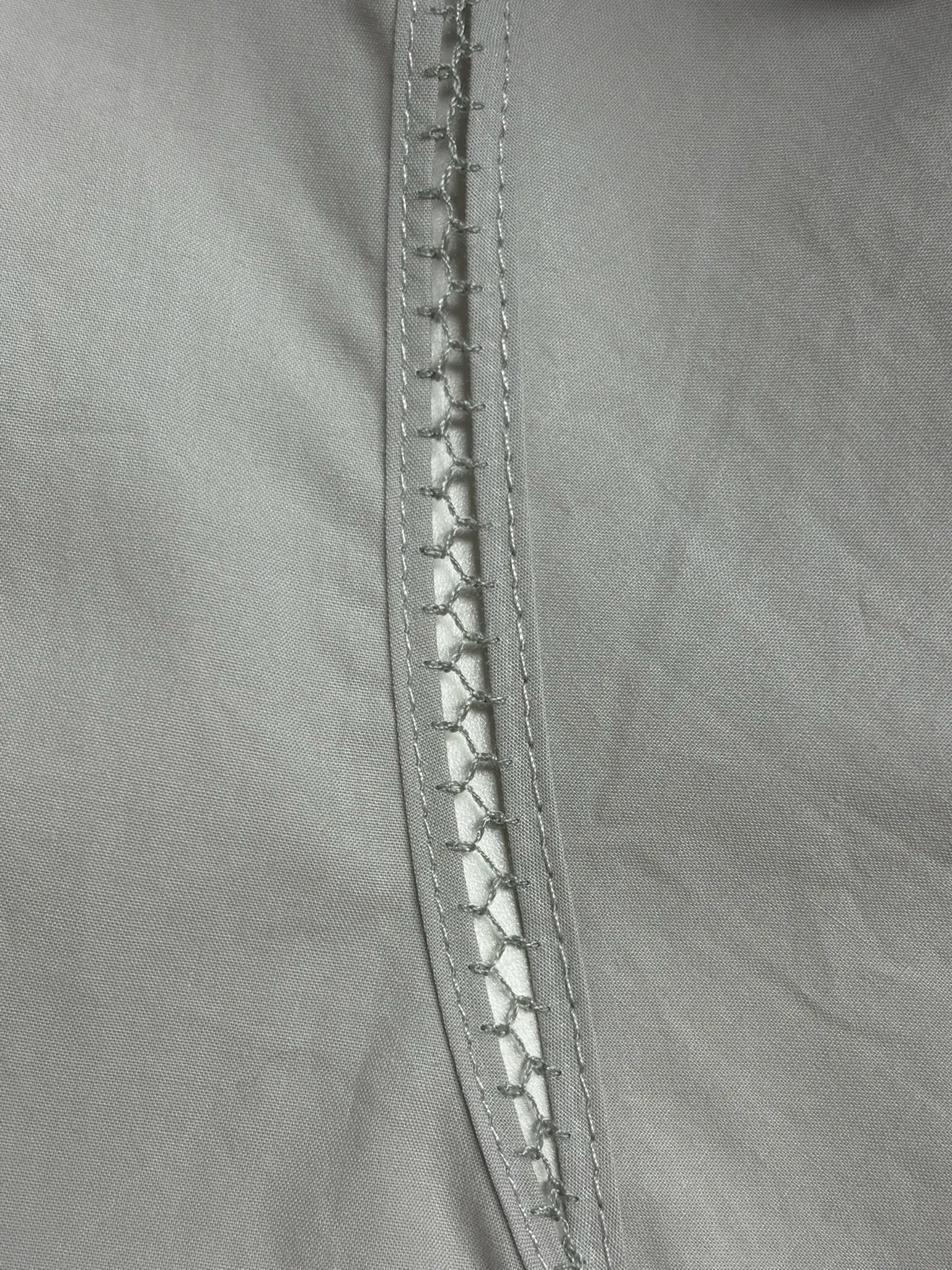
“AQL 2.5” appears on almost every garment inspection report, and it is one of the most widely repeated numbers in sourcing — and one of the least explained. It decides whether a shipment passes or fails, so it is worth ten minutes of understanding before your first inspection result lands in your inbox.
What AQL means
AQL stands for Acceptable Quality Limit. It is a statistical method — the one behind ISO 2859-1, the international sampling standard — for judging a batch of goods by inspecting part of it. “Everything must be perfect” is not a workable pass/fail rule at production scale; AQL defines how many defects a lot may contain, per defect class, before it is rejected. An inspector draws a sample size from the lot according to the standard’s tables, checks those pieces, and compares the defects found against the acceptance numbers for the agreed AQL.
Major 2.5, Minor 4.0 — what the classes mean
Defects are classified by how much they matter to the wearer and the brand, and each class carries its own limit:
- Critical — a defect that makes the product unsafe or unsellable (for a shirt, a needle fragment or a serious functional failure). Critical defects are typically governed by an AQL of 0: one is too many.
- Major (AQL 2.5) — a defect a customer would return the product over: a broken seam, a significant measurement miss, a misplaced print.
- Minor (AQL 4.0) — a defect most customers would tolerate but that still counts against quality: a small stitch irregularity, a faint mark.
The numbers interact with the sample size rather than acting as percentages of the order. Larger lots are sampled more heavily, and the standard’s tables say how many Major and Minor defects the sample may contain per class before the lot fails. A result of “passed at Major 2.5 / Minor 4.0” is therefore a specific, comparable statement — which is exactly why it is worth quoting in the order.
Full inspection, sampled inspection, and where AQL fits
There are two independent decisions in a quality system: how much is inspected, and how defects are judged.
Some suppliers inspect a statistical sample of the goods. Our process is full inspection — every piece is checked before packing — with defects classified against AQL Major 2.5 / Minor 4.0. That means the AQL classes sit on top of a complete check rather than a sampled one: there is no piece that was never looked at, and defects are judged by the standard’s classes rather than by opinion. The QC team of seven works independently of the sewing line, so findings are not graded by the people who made the garment.
What a woven shirt inspection covers
On a shirt order, the check list runs across the garment and the packing:
- Measurements against the approved size chart
- Workmanship — seams, stitching, hems, buttons and buttonholes
- Color consistency against the approved standard, including dye-lot checks
- Print and embroidery placement against the approved artwork
- Finishing — thread trimming, pressing, marks
- Trims, labels and packing against the approved setup
The full quality picture is on the factory and quality page.
Third-party inspection and AQL
Independent inspectors — SGS, ITS or your own agent — use the same AQL standard, which is what makes results comparable across suppliers. We accept third-party inspection before shipment, alongside your own visit or an agent of your choosing; the third-party inspection guide covers when to book one and what the report will say. A practical note for first orders: whatever AQL is agreed, write the defect classes and the inspection point (pre-shipment, at the factory) into the order — a report is only decisive if the standard was set beforehand.
Want an inspection standard written into your order? Tell us the AQL and the inspection route you need through the RFQ form, and we will confirm it with the quote. For how inspection fits the wider order, see sourcing woven shirts from China.