
Cotton poplin, lawn and voile: a fabric guide for woven shirts
Three cotton weaves behave very differently in a shirt — structure, opacity, drape and how they take print. What to specify in the brief, and where each one fits.
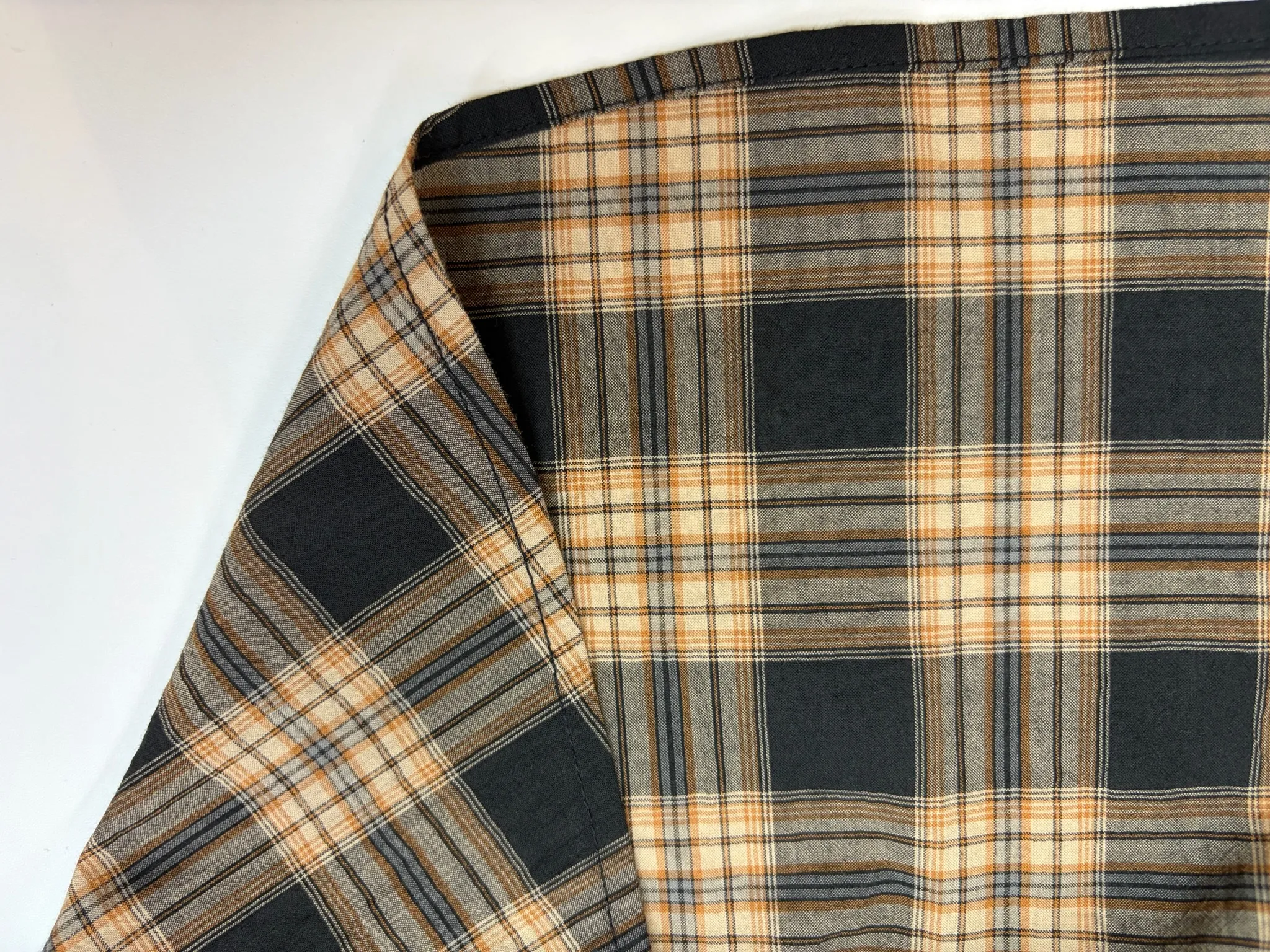
Cotton is one fiber and many fabrics. Poplin, lawn and voile are all plain-woven cotton — same family, different behavior — and choosing between them changes how a shirt falls, how opaque it reads and how it carries artwork. Most sampling surprises in woven shirts trace back to fabric expectations that were never written down, so it is worth deciding the weave deliberately.
Poplin — the structured default
Poplin uses fine warp yarns against a heavier weft in a tight plain weave, which gives it a smooth surface with a subtle crosswise rib and a held shape. In shirting it is the most structured of the three: collars stand, cuffs hold their line, and it presses cleanly.
- Reads as: crisp, office-appropriate, dressy-clean.
- Typical weight: mid-weight for shirting, roughly 100–140 g/m².
- Takes print and embroidery well because the surface is tight and even.
- Watch for: very tightly woven poplins can feel papery until washed; say the hand-feel you want (crisp or soft) in the brief.
Lawn — light, fine and softly sheer
Lawn is woven from finer yarns and is lighter than poplin. It keeps a smooth surface but loses some body — it drapes, feels cool, and moves away from structure toward softness.
- Reads as: refined, breathable, slightly translucent in lighter colors.
- Typical weight: light, often around 70–100 g/m².
- Design consequence: at lighter weights the garment’s opacity changes — if that matters for your market or styling, decide it at fabric selection, not after the sample arrives.
Voile — the airiest option
Voile is the sheerest of the three: open, airy and deliberately see-through in many qualities. A voile shirt is a statement about climate and layering — it is designed around transparency rather than fighting it.
- Reads as: summer, lightweight, effortless.
- Typical weight: the lightest end, commonly 60–90 g/m².
- Design consequence: plan construction and styling (layering pieces, camisoles, double layers) as part of the design, and settle opacity in sampling.
What to write in the brief
For any of the three, a supplier can only source accurately if the brief carries: composition (100% cotton, or a blend you have in mind), weight in g/m², the weave or an accepted reference, finish (crisp, soft-washed, mercerized direction — however you describe it), and a color reference (Pantone or a physical standard). If a print is planned, send artwork dimensions and placements with the brief.
Two structural facts about sourcing these fabrics are worth knowing before you brief:
- Stock versus custom. A stock fabric carries no mill minimum and moves straight to sampling; a custom quality has a mill minimum and roughly 15–45 days of production before garment work begins. For first orders, starting from stock and moving to custom once the style is proven is the usual route — see MOQ and fabric minimums.
- Color runs through lab dips. Whichever weave you choose, the color is developed and approved through lab dips, and stock qualities come in dye lots, so shade tolerance should be agreed in writing.
Where each weave fits
| Structure | Opacity | Best for | |
|---|---|---|---|
| Poplin | High | Solid | Officewear, statement collars and cuffs, print placement |
| Lawn | Medium | Soft-sheer | Refined summer shirts, tonal embroidery, tonal prints |
| Voile | Low | Sheer | Hot-climate wear, layer-driven design, airy summer ranges |
If you are not sure which fit a design needs, say the effect you want — crisp or fluid, opaque or airy — and we can propose qualities against it. Fabric development and sourcing, including these three weaves, sits inside our development service; the fabrics and details page covers how we work on material direction.
Sourcing a cotton shirt range? Send the composition, weight and color direction you have through the RFQ form — we will come back on feasibility and the material options behind it. For the wider view, see sourcing woven shirts from China.