
How to choose a woven shirt manufacturer: a buyer's checklist
The questions that separate a real woven shirt partner from a capacity seller — capability, development depth, quality system, transparency and the terms to compare.
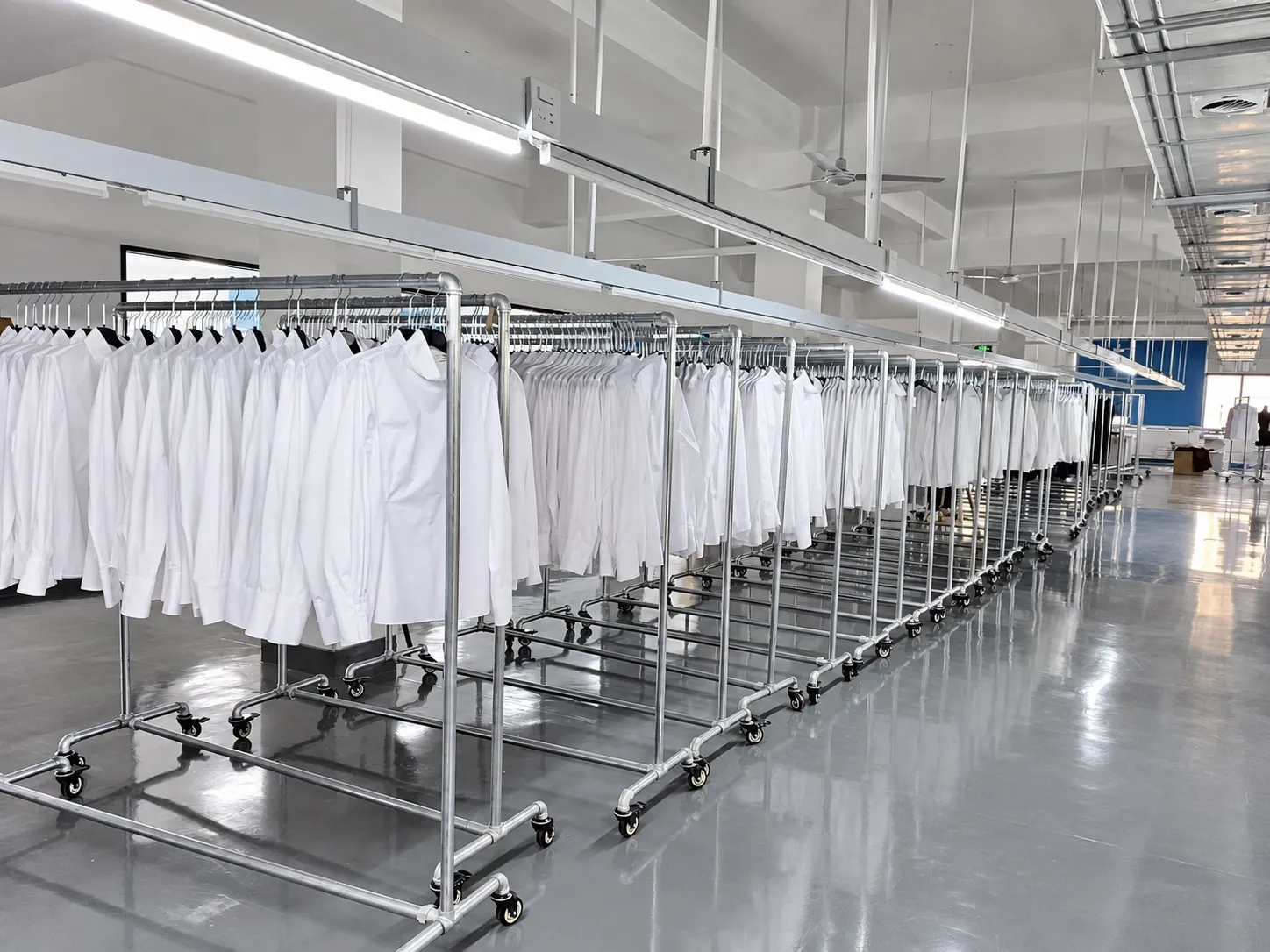
Choosing a manufacturer is a filtering exercise, and the filter that matters is not price — it is whether the supplier’s way of working matches the way your product needs to be made. This checklist is the short version of how to tell, written for brands sourcing women’s woven shirts. Work through it with every candidate; the answers profile a supplier faster than any brochure.
1. Capability fit — do they actually make your product?
- Which categories are core to them, and which are occasional? A specialist in your product class will have solved your problems before.
- Can they show their own developments — patterns they built, not customer work they cannot disclose? We publish three of ours on the products page precisely because a development is proof of process.
- Do they work from a tech pack, a size chart, a reference garment — or only from completed designs? The more input forms they can develop from, the earlier in your process they become useful (see briefing from a reference sample).
2. Development depth — where does the pattern come from?
- Is pattern making in-house, and is there a working sample room? A supplier without either is a middle layer, which is workable if disclosed, and a risk if not. Our own team includes a design and sample room of 21 people, and pattern-to-sample is the first thing we exercise on any brief.
- Ask how many sample rounds a typical development takes and what an extra revision costs — you want that answer before you need it.
- The development path itself is in from tech pack to first sample.
3. Quality system — standards, not adjectives
- Ask exactly what happens before shipment: full inspection or a statistical sample? Ours is full inspection — every piece checked before packing.
- Which defect standard is applied? “High quality” is not a standard; AQL Major 2.5 / Minor 4.0 is. The AQL explained guide covers how the classes work.
- Is the QC team independent of production? Ours is, and it changes what a check can catch.
- Do they accept third-party inspection? This one is close to binary: a supplier who welcomes SGS, ITS or your own agent is showing you the goods; see the third-party inspection guide.
4. Production transparency — who actually makes your order?
- The honest answer for most established manufacturers is a mix of own capacity and long-term partner factories. What matters is whether they say which is which, and who stays accountable. Compare their answer with how to read a factory profile.
5. Commercial clarity — the terms, in writing
- MOQ counted per style, per color — get the number and the colorway logic, not a total. Here is how ours works.
- Payment structure — deposit percentage, balance trigger and transfer method. Ours: T/T, 30/70 against the B/L on regular orders, 50/50 on smaller trial orders; the reasoning is in payment and shipping terms.
- Trade term and port — ours is FOB Ningbo or Shanghai, stated up front.
- What the quote includes — fabric, trims, packing, and which revision rounds; the quote guide covers the levers that move it.
6. Compliance and communication
- Ask which certification and testing requirements they meet and can document for your market — requirements differ by brand and market, so the answer should be “tell us the standard and we confirm” rather than a badge wall. Our position is stated on the factory and quality page.
- Check the communication setup: a named contact, a stated working window (ours is Monday to Friday, 9:00–18:00 Beijing time) and a channel that fits your files — details on the contact page.
Red flags worth taking seriously
- No route to verification: no inspection accepted, no sample room visit, no references to check.
- A price before construction and quantity are specified.
- “Unlimited capacity” — no factory has it.
- Answers that change between conversations; the factory profile guide lists more.
Juliana Apparel works this way: we develop and produce women’s woven shirts and lightweight officewear for European brands from Ningbo, China — our own factory plus long-term partners, disclosed per project, with development, materials, finishing and QC managed by our own team. Run this checklist against us the same as anyone else.